The mission
Helping people sleep better - and live better.
Millions struggle with tiredness, snoring, broken nights, or daytime fatigue - often without realising these can be signs of underlying medical conditions. When breathing is disrupted during sleep, it quietly strains the heart, brain, and mood.
Our mission is to make sleep health simple to understand, easy to assess, and effective to treat - so you can wake restored, energised, and ready to live fully.
Learn what's really happening at night, why it matters, and how modern testing and treatment can help.
Take snoring seriously
Snoring and broken sleep can signal deeper medical issues
Do you snore, choke in your sleep, wake up tired, struggling to stay awake during the day? Does your partner complain about your snoring? These are not just annoyances - they can be early signs of obstructive sleep apnoea (OSA), a condition where your breathing repeatedly pauses during sleep.
These symptoms are common - and often overlooked. But untreated OSA is linked to increased risk of high blood pressure, heart attack, stroke, and cognitive decline. Even mild cases can drain your energy, mood, focus, and productivity.
The good news: once identified, OSA is highly treatable, and many people feel better surprisingly quickly.
Snoring is widespread
Prevalence varies across regions but affects a large share of adults globally. Rates rise with age and weight.
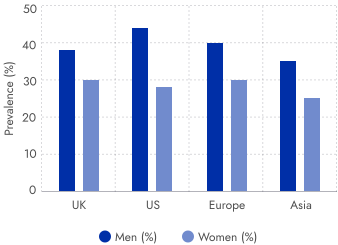
Souces: BLF Toolkit 2015; Infographic Data 2024; NHANES (US CDC); British Sleep Society 2023
Snoring can indicate OSA
Many people who snore also have undiagnosed OSA, most commonly mild-to-moderate. Early screening can identify risk before health impacts occur.
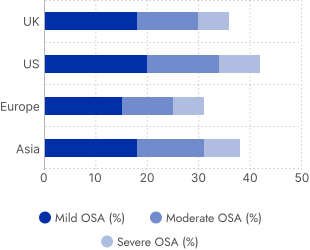
Sources : Sleep Disorders UK 2024; Marin et al., Lancet 2005; Benjafield et al., Lancet Resp Med 2019
Snoring increases risk
Snoring is not just a nuisance - studies show higher odds of hypertension, stroke, and daytime fatigue.

Sources : Marin et al., Lancet 2005; Gami et al., Circulation 2013; Cochrane Review 2020
Know what's happening
Obstructive Sleep Apnoea briefly stops your breathing - often without you noticing
In OSA, the airway narrows during sleep, causing repeated breathing pauses, dropping your oxygen levels. Your brain jolts you awake just enough to gasp for air - sometimes hundreds of times per night - preventing deep, restorative sleep.
Over time, the strain can affect blood pressure, heart function, and cognitive health. The reassuring news: OSA is widely treatable, and most people notice improvements quickly once supported.
Understanding the condition is the first step to solving it.
When oxygen drops, every system responds
Each apnoea activates the body's stress response - raising blood pressure, hormones, and heart rate while reducing restorative sleep.
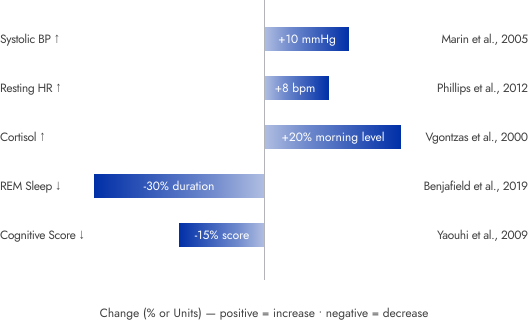
Data adopted from Benjamin et al., JAMA 2009; Vgontzas et al., Sleep 2000; Stewart et al., Endocrinol 2008.
Systemic Impact Pathway
From elevated blood pressure to inflammation and impaired brain recovery, untreated OSA silently accelerates ageing processes.
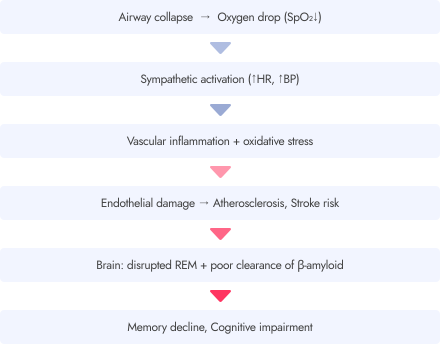
Oxygen drives everything
Repeated oxygen drops during sleep strain the heart, brain and circulation.
When your airway closes, your oxygen levels fall. Your body responds by releasing stress hormones, spiking blood pressure, forcing your heart to work harder. This silent stress repeats all night long.
Over time, these oxygen dips contribute to hypertension, arrhythmias, fatigue, memory issues, and accelerated cognitive decline.
Stabilising your airway protects your heart and brain - and helps you wake clear, calm, and energised. Restoring oxygen at night is one of the most powerful ways to protect long-term health.
Protect your future health
Untreated sleep disorders increase risk of heart disease, stroke and cognitive decline
Repeated disruption prevents the brain's overnight "clean-up" processes, allowing inflammatory proteins to accumulate. Poor-quality sleep is linked with higher rates of hypertension, stroke, heart attack, and Alzheimer's-related changes in the brain.
The important message: these risks are treatable. When breathing is stabilised at night, inflammation decreases, stress hormones settle, and cardiovascular strain improves, supporting long-term brain health.
Treating OSA reduces cardiovascular strain - a powerful preventative step.
Chronic Inflammation from Poor Sleep
Inflammatory markers rise sharply in untreated OSA but improve with treatment - showing reversibility of risk.

Data adopted from Benjamin et al., JAMA 2009; Vgontzas et al., Sleep 2000; Stewart et al., Endocrinol 2008.
Relative Risk of Major Diseases by Sleep Quality
Even modest sleep restriction increases hypertension, stroke, and cognitive decline risk but these trends reverse with treatment.
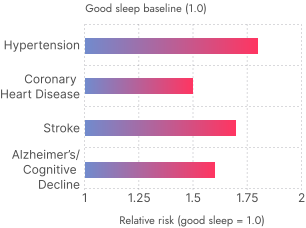
Sources : Sleep Disorders UK 2024; Marin et al., Lancet 2005; Benjafield et al., Lancet Resp Med 2019
Sleep Quality and Brain "Clean-Up" Efficiency
When oxygen levels drop and sleep fragments, the brain's waste-clearance slows - a mechanism linking OSA to Alzheimer's risk.
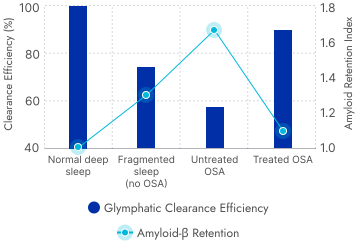
Fragmented or apnoea-disrupted sleep slows the brain's overnight "clean-up", allowing more amyloid to accumulate - but treatment helps restore function.
Simple, effective treatment solutions
Awaken Plus offers personalised treatment that restores healthy breathing at night
Awaken Plus provides discreet, medical-grade home sleep studies. A compact device overnight in your own bed, recording your breathing pattern, oxygen levels, heart rate, and sleep stages.
Our clinicians review the data and explain exactly what's happening - clearly and calmly. You'll know whether your symptoms require treatment, and what to do next.
If sleep apnoea is detected, there are several straightforward treatment options. Depending on your needs, this may include a custom oral appliance, gentle airflow support, positional therapy, or personalised sleep-coaching strategies.
Most people notice benefits quickly: clearer mornings, steadier energy, fewer nighttime awakenings, and improved mood. More importantly, treatment reduces long-term risk to your heart and brain. Awaken Plus supports you through testing, treatment, and ongoing care - every step of the way.
The good news: once identified, OSA is highly treatable, and many people feel better surprisingly quickly.
Awaken Plus delivers near-lab accuracy with at-home simplicity.
Medical-grade sensors provide > 90% diagnostic accuracy - matching sleep-lab reliability at one-quarter the cost.
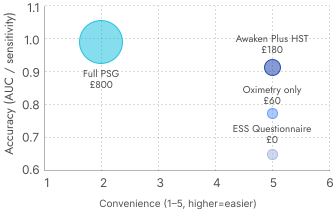
Awaken Plus HST offers near-PSG accuracy with maximum convenience and a fraction of the cost.
When compliance is included, oral appliances outperform other therapies overall.
High comfort and adherence make custom oral devices the most effective real-world solution for many patients.
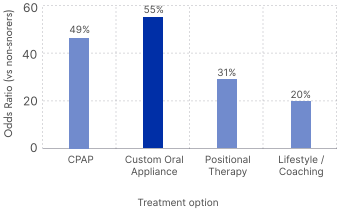
Real-world benefit combines clinical effectiveness and how often treatment is actually used.
Benefits build quickly - and sustain with continued use.
Patients typically experience major symptom improvement by weeks 4-8 and blood-pressure stabilisation by week 12.
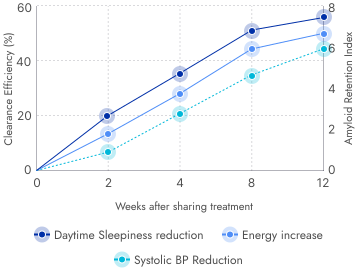
Symptom relief accelerates through weeks 4-8, with cardiovascular benefits consolidating over the first 3 months.
You're not alone
Sleep apnoea affects millions - but most remain undiagnosed
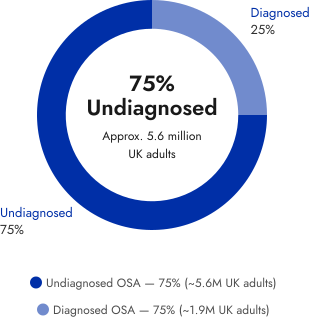
In the UK, around 25% of adults aged 30-70 have mild-to-severe sleep apnoea (OSA) - roughly 7.5 million people. About 1.5 million live with moderate-to-severe disease, where health risks increase sharply. Yet an estimated 70-85% of cases are never diagnosed.
Most people assume they're just 'bad sleepers' or permanently tired. In reality, undiagnosed OSA can raise the risk of heart attack, stroke, dangerous driving fatigue, and cognitive decline. Severe, untreated disease is associated with 6-12 years of reduced life expectancy. Even moderate cases can drain energy, mood, focus, and productivity day to day. It's common, often silent, and highly treatable.
Awaken Plus makes testing and treatment simple - and the improvement in how you feel can be significant.
OSA is one of the most common chronic conditions worldwide.
Roughly 1 in 4 adults experience disordered breathing during sleep - a burden comparable to diabetes or hypertension.
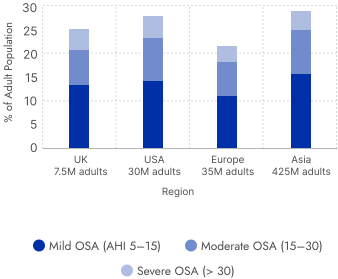
Up to three quarters of people with OSA don't know they have it.
Awareness lags far behind prevalence - leaving millions at risk for avoidable heart and brain damage.
Treatment narrows the life-expectancy gap by two-thirds.
Continuous treatment restores longevity and prevents premature cardiovascular events.
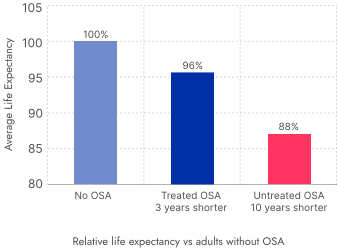
Effective treatment closes about two-thirds of the life-expectancy gap between untreated OSA and healthy sleepers.


